
Composite decking has become the default choice for a lot of Metro Atlanta homeowners who want a deck that looks like wood without babysitting it every spring. We install capped composite boards from Trex, TimberTech, and Fiberon, and we build the frame underneath to hold up just as long as the decking itself.
Composite decking runs a mid-range of $60 to $85 per square foot, with premium tiers reaching $90 to $115 per square foot — roughly $24,000 to $46,000 for a typical 400 square foot deck. Every estimate is itemized so you know exactly what you're paying for.
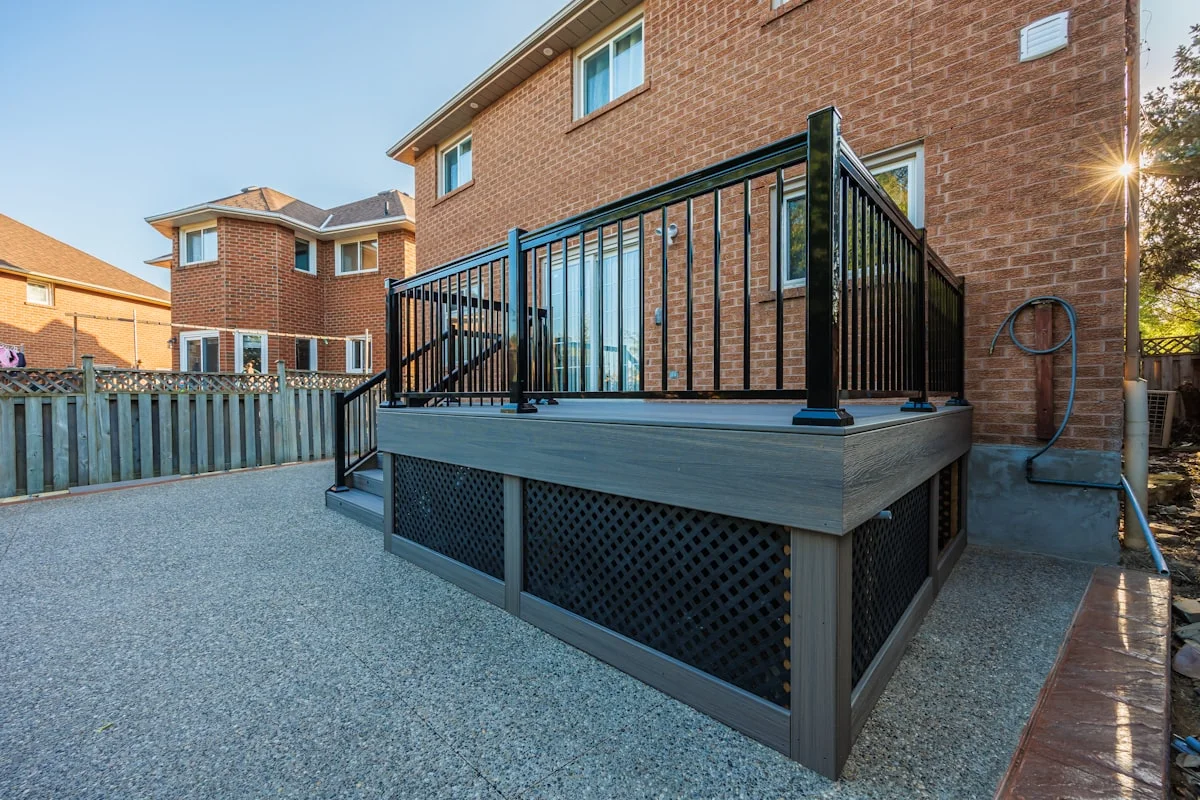
Capped vs. Uncapped, and Why It Matters Here
Capped boards wrap a wood-plastic core in a protective polymer shell that resists staining, fading, and moisture absorption. Uncapped composite is cheaper but its exposed core can still pick up mildew discoloration. We install capped boards almost exclusively for that reason, and we'll bring physical samples to your house so you can see how a color reads against your siding in real Atlanta daylight.
Warranties, Cost, and Permits
Manufacturer warranties on capped composite decking typically run 25 to 50 years against fading, staining, and structural defects — coverage that doesn't exist for a wood deck. Any deck attached to your house or elevated more than a step needs a permit and, in most cases, engineered plans under Georgia's building code. We handle the drawings, the filing, and every inspection for you at no additional charge.
Board Profiles and Hidden Fastener Systems
Most composite boards we install use a grooved-edge profile paired with a hidden fastener clip system, so the finished deck has no visible screw heads on the walking surface — a cleaner look than face-screwed wood, and one less spot for water to sit and stain the board. Board cores vary by tier too: some lines use a solid core for extra rigidity on longer spans, while lighter scalloped-core boards keep material cost down without sacrificing the capped shell's protection.
Composite vs. Wood for Metro Atlanta Backyards
Composite costs more per square foot than pressure-treated wood, but skips the sanding, staining, and resealing cycle a wood deck needs roughly every 12 to 18 months in Georgia's climate. If you're weighing the two, our custom wood decks page breaks down PT pine, cedar, and hardwood pricing side-by-side — and either material pairs well with a shade structure from our pergolas and covered decks page if you're extending the outdoor season, not just the deck itself.
Composite Decking Across Metro Atlanta's GA-400 Corridor
We install composite decking throughout the fast-growing suburbs along GA-400, including Alpharetta and Johns Creek, as well as the planned communities of Peachtree City further south. Composite's low-maintenance appeal tends to resonate most in these busy, family-heavy markets where nobody wants a resealing project competing with the weekend. Reach out to Atlanta Deck Builders for a free, itemized composite quote anywhere in Metro Atlanta.
Get a Free Composite Decking Quote
Free, no-obligation on-site estimates anywhere in Metro Atlanta.
📞 Call 470-660-4604Composite Decking FAQs — Atlanta, GA
Composite decking typically runs $60 to $115 per square foot installed, depending on tier and brand — about $24,000 to $46,000 for a 400 sq ft deck. Premium Trex and TimberTech lines land toward the higher end; Fiberon and entry-tier composite lines come in lower. Every estimate is itemized and free.
We work with all three regularly. Trex and TimberTech tend to lead on color selection and warranty length, while Fiberon often comes in a bit lower on price for a similar capped-composite build. We bring physical samples to your house so you can see how a color reads in real Atlanta daylight before you decide.
Capped composite wraps a wood-plastic core in a protective polymer shell that resists staining, fading, and moisture absorption on all four sides of the board. Uncapped composite skips that shell, costs less, but its exposed core can still pick up mildew discoloration over time. We install capped boards almost exclusively for that reason.
Most composite decking today uses a hidden fastener system — a clip or track that locks into a grooved edge on the side of the board — so there are no visible screw heads on the walking surface. It gives a cleaner look than face-screwed boards and also reduces the chance of water pooling around fastener heads.
Compared to wood, very well. Capped composite doesn't absorb moisture the way wood fibers do, so it isn't prone to the swelling, cupping, or mildew staining that humid Georgia summers cause in untreated lumber. Spring pollen rinses off with a hose instead of soaking into open wood grain.
Yes, in nearly every case. The permit requirement is based on the structure — attachment to the house and elevation — not the decking material sitting on top of it. We manage the entire permit process for you at no additional charge, whether that's in Fulton County or anywhere else in Metro Atlanta.
Manufacturer warranties on capped composite boards typically run 25 to 50 years against staining, fading, and structural defects. The framing underneath still needs to be built right, though — that's where our part of the job matters as much as the decking brand's warranty paperwork.
Far less than wood by a wide margin. A seasonal rinse and an occasional soap-and-water scrub handles pollen film and mildew spots — no sanding, staining, or sealing on your calendar, which is the biggest reason homeowners upgrade from a wood deck to composite.
Yes. We regularly install composite decking in Alpharetta and Johns Creek, both served by the GA-400 corridor, as well as neighboring Roswell and Duluth. These fast-growing areas see a lot of composite requests from homeowners who want a deck that keeps up with a busy schedule.
It's a popular choice there. Peachtree City's planned neighborhoods along GA-74 and GA-54 see plenty of composite installs from homeowners who'd rather spend weekend time on the golf-cart paths than resealing a deck every year.
For a backyard that sees daily use — kids, pets, grilling — composite generally wins on maintenance since it skips the sanding, staining, and sealing cycle wood needs. Wood still wins on upfront cost and that natural-grain look; our custom wood decks page walks through that trade-off in more detail if you're deciding between the two.
Most composite lines we install use a grooved-edge board profile designed for hidden fasteners, in either a solid or a lighter-weight scalloped-core option depending on the product tier. We'll show you actual board samples so you can feel the difference in weight and surface texture before choosing.